
The Future of Automated Expense Tracking for Businesses
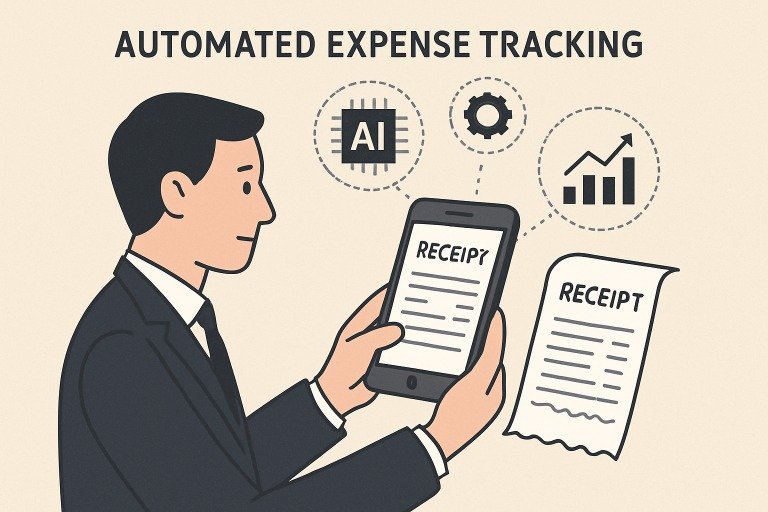
Table of Contents
- AI-Powered Expense Management
- Hyperautomation in Expense Tracking
- Integration with Fintech Platforms
- Enhanced Fraud Detection
- Global Tax Compliance
- Real-Time Financial Insights
- Future Outlook
Managing business expenses used to be a labor-intensive process that often led to errors, delays, and frustration. Today, digital transformation is redefining how organizations keep their financial houses in order. With automation and artificial intelligence advancing rapidly, companies of all sizes can now overhaul their expense management strategies for greater efficiency and accuracy. Businesses looking to stay on top of this trend can read me to discover the next-generation tools shaping the field.
Expense tracking platforms have become more than just record-keeping systems. They are actively driving policy compliance, improving fraud detection, and delivering vital financial insights. By integrating these tools, organizations can dramatically reduce manual effort, streamline approvals, and realize significant cost savings. As expense management solutions continue to evolve, executives and finance teams are finding that the ability to adapt quickly to technological change can provide a decisive advantage in their industries.
This evolution is occurring at all levels, from startups to large enterprises. For growing companies, implementing automated tracking early provides a foundation for scalable financial operations. Large organizations benefit from tighter controls, enhanced visibility, and the capacity to adapt to complex regulatory requirements across geographies. Whether your business needs stem from compliance, efficiency, or cost containment, automated expense management can play a critical role in navigating today’s business environment.
To help you understand the transformation happening in expense management, this article explores the latest trends and technologies. Below is a detailed overview of the key innovations and what they mean for your organization.
AI-Powered Expense Management
Artificial Intelligence is playing a significant role in automating tedious expense-related tasks. AI-enabled software handles everything from receipt scanning to categorization and enforcement of spending policies. According to Forbes, automation and AI can reduce manual workloads by up to 80% in finance departments. Optical Character Recognition (OCR) technology, a core component of AI-driven systems, allows employees tophotograph receipts simply.. The platform then extracts, categorizes, and logs the data with high accuracy, substantially reducing the risk of errors that can affect financial recordkeeping and compliance.
Hyperautomation in Expense Tracking
Hyperautomation is more than just basic automation. By integrating AI, machine learning, and robotic process automation, it creates a system that essentially removes repetitive manual effort. In expense management, this covers the full spectrum from receipt capture to approval routing and reimbursements. The result is faster processing times, lower risk of human error, and significantly improved compliance with internal policies and regulations. Hyperautomation platforms, such as those highlighted by Gartner, are now considered foundational for efficient digital finance functions.
Integration with Fintech Platforms
The convergence of fintech and expense management is rapidly changing the way businesses control spending. Financial institutions and software companies are embedding expense-tracking tools into corporate cards and payment platforms. This integration delivers real-time spend controls, consolidated vendor relationships, and a streamlined travel and expense experience for employees. It also helps close financial books more quickly by minimizing reconciliation exceptions and enabling direct access to transaction data across systems, thereby supporting both accuracy and efficiency.
Enhanced Fraud Detection
Expense fraud has evolved, with new forms such as AI-generated fake receipts presenting genuine challenges for organizations. To stay ahead, businesses increasingly use machine learning tools that analyze thousands of data points, including metadata from receipts, outlier spending behavior, and duplicate transactions. Automated fraud detection tools can flag suspicious claims much faster than manual reviewers, decreasing financial risk and building trust across the company. Many organizations now consider this a critical layer of protection in their internal control systems.
Global Tax Compliance
Operating internationally introduces the challenge of complying with diverse tax laws and reporting requirements. The latest expense management solutions use AI to ensure expenses align with rules set by authorities such as the IRS in the United States and HMRC in the United Kingdom. They handle tasks like automated tax calculations, digital archiving for audits, and country-specific compliance. This provides executives with peace of mind and minimizes the risk of costly penalties due to non-compliance.
Real-Time Financial Insights
Automated expense management platforms offer real-time analytics on spend patterns, supporting data-driven financial decisions. These tools can predict trends, alert leaders to adverse developments early, and identify ways to trim excess costs. Visibility into spend categories, expense anomalies, and policy compliance supports informed budgeting and planning. Coupled with predictive analytics, these insights give organizations a measurable edge in controlling operational costs and managing cash flow.
Future Outlook
The trajectory of expense management is set towards touchless, highly transparent systems that offer both speed and robustness. The continued adoption of AI and automation across finance functions will lead to more streamlined processes, greater control, and deeper strategic insights. Early adopters are likely to enjoy lower costs, reduced errors, and the competitive advantage that comes with enhanced financial agility. As technology evolves, keeping up with these advancements is increasingly essential for any organization aiming to excel financially in an ever-changing global marketplace.
By embracing these new tools and approaches, businesses can transform expense management from a mere administrative burden into a driver of value. Understanding and leveraging the future of automated expense tracking is more than just a technological upgrade. It is a fundamental shift in how businesses maintain control, compliance, and clarity over their financial operations.